

Complete comparison of Amazon FBA and FBM business models. Understand the pros, cons, costs, and which one fits your business goals.
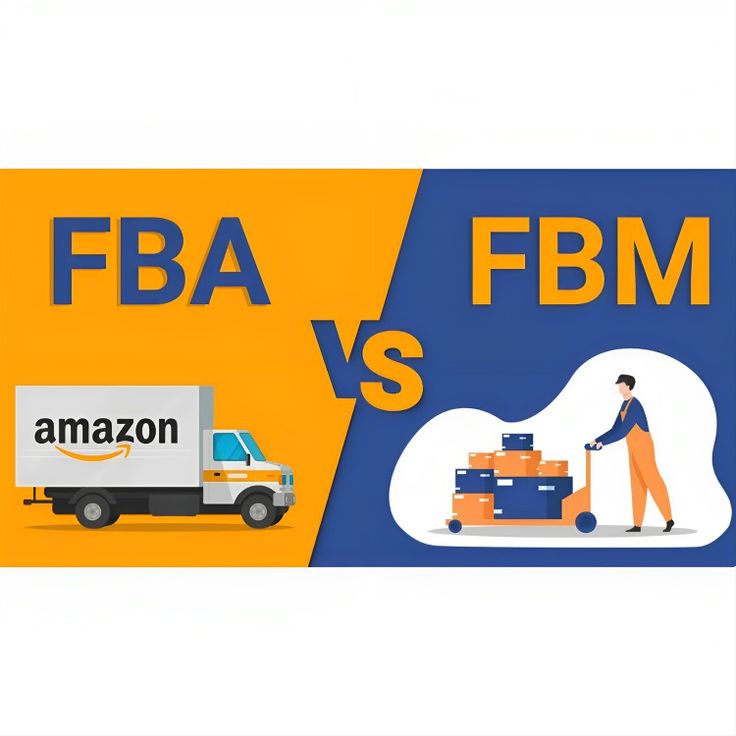
When selling on Amazon, one of the first and most important decisions you’ll make is how to fulfill your orders. This choice—between Fulfillment by Amazon (FBA) and Fulfillment by Merchant (FBM)—doesn’t just affect your logistics. It shapes your costs, customer experience, and long-term growth strategy.
Many sellers treat this as a simple operational decision. In reality, it’s a strategic one. The model you choose will influence how scalable, profitable, and competitive your business becomes.
At a basic level, the difference between FBA and FBM comes down to who handles fulfillment.
With FBA, you send your inventory to Amazon’s warehouses, and Amazon takes care of storage, packing, shipping, and even customer service. It’s a hands-off approach that allows you to focus on sourcing and marketing.
With FBM, you remain in control of the entire fulfillment process. You store inventory yourself (or through a third-party warehouse), pack orders, and handle shipping and customer support.
This difference might seem straightforward, but its impact is significant.
Cost is often the first factor sellers consider—and for good reason.
FBA comes with multiple fees, including storage, fulfillment, and referral fees. While these can add up quickly, they also cover a wide range of services that would otherwise require time and infrastructure to manage.
FBM, on the other hand, avoids many of these fees. But that doesn’t mean it’s automatically cheaper. You still need to account for warehousing, packaging materials, shipping costs, and labor.
The real question isn’t which option is cheaper—it’s which one delivers better value for your specific product and business model.
For lightweight, fast-moving products, FBA often makes financial sense. For bulky or low-margin items, FBM can be more cost-effective.
In today’s e-commerce landscape, speed matters more than ever.
FBA gives you access to Amazon’s logistics network, including Prime shipping. This means faster delivery times and higher visibility, as Prime listings tend to convert better.
FBM sellers can still compete, but matching Amazon’s speed consistently is challenging. Delays in shipping or inconsistent delivery times can affect customer satisfaction and, ultimately, your seller metrics.
For many customers, fast and reliable delivery isn’t just a bonus—it’s expected. This is one of the biggest reasons why FBA remains so popular.
Inventory management is another key difference between the two models.
With FBM, you have full control over your inventory. You can store products wherever you want, manage stock levels in real time, and avoid long-term storage fees. This flexibility is especially useful for seasonal products or businesses with fluctuating demand.
FBA, while convenient, comes with restrictions. Inventory must be sent to Amazon’s warehouses, and storage limits can apply. There are also additional fees for slow-moving or excess inventory.
This means you need to plan carefully when using FBA. Poor inventory management can quickly lead to increased costs.
Customer experience plays a major role in long-term success on Amazon.
With FBA, Amazon handles most customer service tasks, including returns, refunds, and inquiries. This reduces your workload and ensures a consistent experience for buyers.
With FBM, the responsibility falls entirely on you. You need to respond to customer messages, handle returns, and resolve issues promptly. While this gives you more control, it also requires time and resources.
For sellers who want a more automated business, FBA offers a clear advantage.
Scalability is where the difference between FBA and FBM becomes even more apparent.
FBA is designed for growth. As your order volume increases, Amazon’s infrastructure handles the additional workload without requiring major changes on your end. This makes it easier to scale quickly.
FBM can also scale, but it requires building your own systems. As orders grow, you may need more storage space, staff, and logistics coordination. This can become complex and resource-intensive.
However, FBM offers one advantage: independence. You’re not fully reliant on Amazon’s system, which can be valuable for diversifying your business across multiple channels.
There’s no universal answer, because the right choice depends on your specific situation.
FBA is often the better option if you:
FBM may be the better choice if you:
Many successful sellers don’t choose just one—they use both strategically.
An increasing number of sellers are adopting a hybrid model, using both FBA and FBM together.
For example, you might use FBA for your best-selling products to maximize speed and conversions, while using FBM for slower-moving or oversized items to reduce costs.
This approach allows you to balance efficiency and control, optimizing your operations based on product type and demand.
Choosing between FBA and FBM is more than a logistical decision—it’s a foundational part of your strategy on Amazon.
FBA offers convenience, speed, and scalability, making it ideal for rapid growth. FBM provides flexibility and control, which can be valuable for managing costs and operations.
The most effective approach is not to view them as competitors, but as tools. When used strategically, both models can complement each other and support long-term success.
In the end, the goal isn’t just to fulfill orders—it’s to build a business that is both profitable and sustainable.